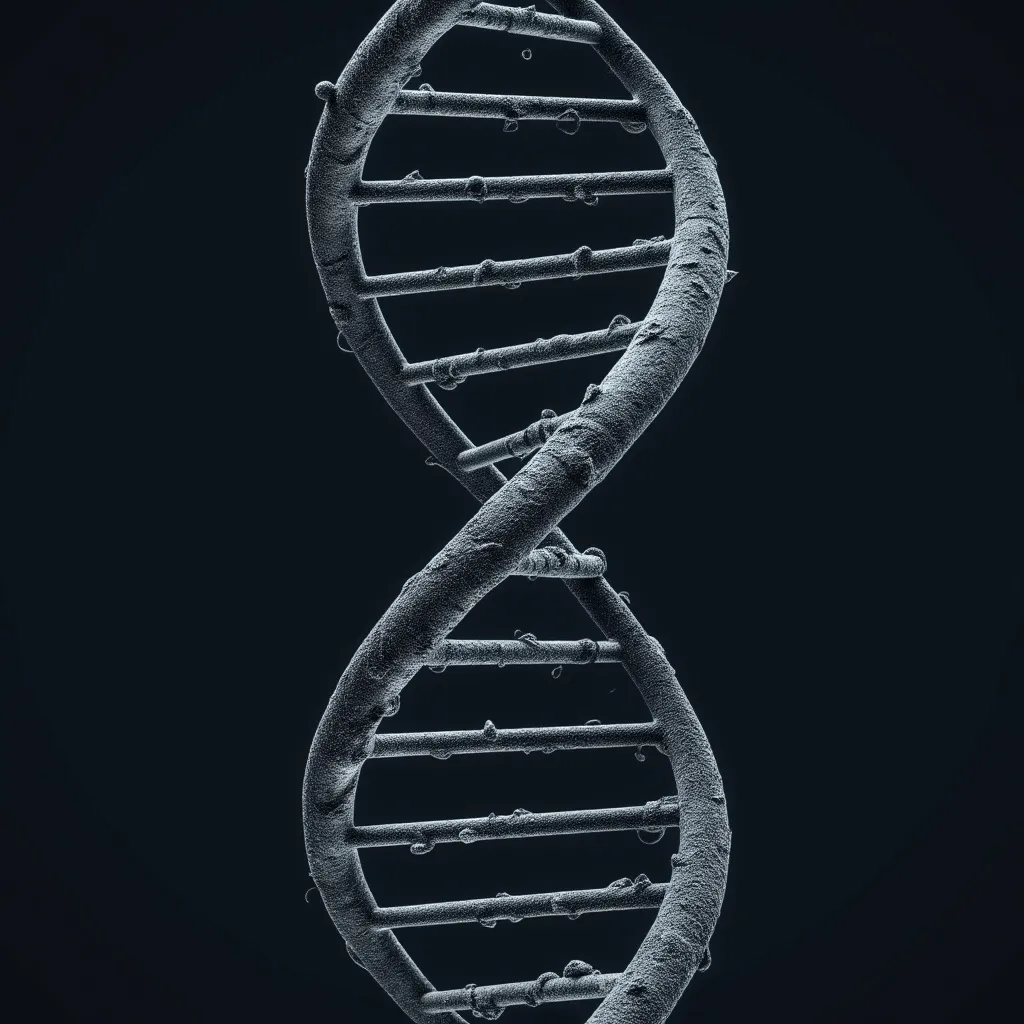
Understanding Mendelian Genetics and Its Application
Explore the fundamental principles of Mendelian genetics and how these timeless laws continue to influence modern genetics, with practical insights into how personal DNA analysis tools, such as ChatDNA, can illuminate your genetic profile.
Mendelian genetics forms the cornerstone of our understanding of hereditary patterns and the transmission of traits from one generation to the next. The foundational work of Gregor Mendel, an Austrian monk and botanist, established principles that are indispensable in the field of genetics today. Mendel’s experimentation with pea plants laid the groundwork for how we comprehend the genetic traits of organisms, including humans.
The Origins of Mendelian Genetics
Gregor Mendel’s work in the mid-1800s focused on understanding how traits are passed down through generations. He conducted methodical experiments on pea plants, examining clear traits such as plant height, flower color, and seed shape. Through this work, Mendel formulated two key laws: the Law of Segregation and the Law of Independent Assortment.
The Law of Segregation asserts that each organism possesses two alleles for each trait, which separate during the formation of gametes. This means offspring inherit one allele from each parent, leading to variation in physical traits.
The Law of Independent Assortment states that alleles for different traits distribute to gametes independently. This principle explains how traits are inherited separately from one another.
Genetic Dominance and Recessiveness
Mendel identified that traits could be dominant or recessive. Dominant traits are expressed in the presence of at least one dominant allele, while recessive traits require two recessive alleles for expression. These concepts are fundamental for predicting phenotypic outcomes in offspring.
For example, if a plant has one allele for tallness (dominant) and one for shortness (recessive), the plant will be tall. This principle is invaluable in predicting patterns of inheritance and has applications in agriculture, medicine, and genetics research.
Mendel’s Ratios
Mendel’s experiments led to predictable ratios of trait distribution in offspring, known as Mendelian ratios. When dealing with monohybrid crosses (crosses examining a single trait), Mendel observed a classic 3:1 ratio of dominant to recessive phenotypes. For dihybrid crosses (examining two traits), he observed a 9:3:3:1 ratio, showcasing the independent assortment of alleles.
Applications of Mendelian Genetics in Modern Science
Today, Mendelian genetics is applied across numerous fields of science and medicine. Genetic counseling utilizes Mendelian principles to advise individuals and families about inherited conditions. In agriculture, these principles are applied in the breeding of crop species with desired traits.
In health sciences, understanding Mendelian inheritance assists in diagnosing genetic conditions that follow Mendelian patterns, such as cystic fibrosis or sickle cell anemia. Modern genetic testing services, such as ChatDNA, allow individuals to explore their genetic makeup using insights garnered from Mendelian genetics and beyond.
Beyond Mendel: Exceptions and Extensions
While Mendel’s laws provide a foundation for genetics, exceptions exist. Not all traits follow simple Mendelian patterns. These deviations include incomplete dominance, codominance, pleiotropy, and polygenic inheritance. These concepts enrich the complexity of genetics and demonstrate that some traits are controlled by multiple genes or exhibit intermediate phenotypes.
An interesting discovery in modern genetics is the influence of epigenetics, which examines how environmental factors can alter gene expression without changing the underlying DNA sequence. This reflects an extension of Mendel’s work, as it introduces the idea that gene regulation can be influenced by non-genetic factors.
Practical DNA Exploration with Modern Tools
For those interested in practical applications of Mendelian genetics, modern DNA analysis services can provide personal insights into genetic conditions and traits. Companies like ChatDNA enable users to analyze their genetic data to gain insights into health and wellness, reflecting the continued relevance of Mendelian principles. This knowledge can inform individuals about potential genetic predispositions or guide lifestyle and health decisions.
The Legacy of Mendelian Genetics
Mendelian genetics remains a vital part of modern biology and genetics. Mendel’s pioneering work offers powerful tools to predict genetic outcomes and enhance our understanding of heredity. By providing a clear framework through which to view genetic inheritance, Mendelian genetics continues to support innovations in genetic research, medicine, and biotechnology.
What is ChatDNA?
ChatDNA can analyze your DNA to answer any question. When you ask a question it will provide clear explanations and meaningful insights about who you are at a genetic level.
You can import existing DNA results from all major services like 23andMe and AncestryDNA or purchase a new DNA test kit through ChatDNA.
ChatDNA is especially valuable for anyone interested in:
- Understanding how their genes influence health and wellness
- Learning about their unique genetic traits
- Discovering personalized insights about their biological characteristics
- Getting clear, conversational answers to their DNA-related questions
Ready to get answers about your DNA? Visit ChatDNA.co to get started.